

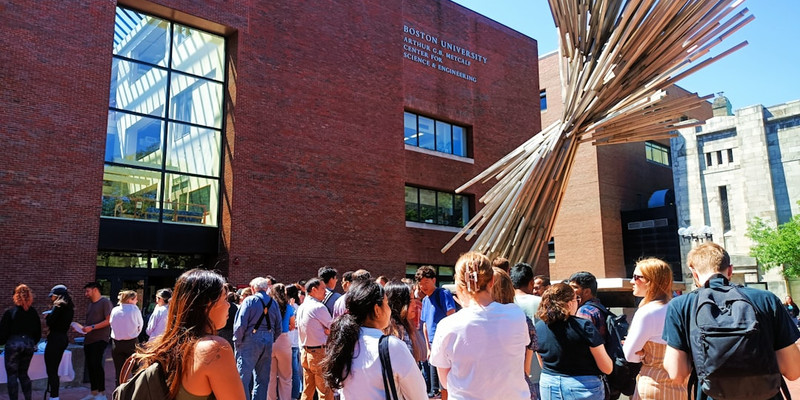
Student activists across several universities this week renewed demands that their schools declare themselves “sanctuary campuses,” arguing that federal immigration enforcement should be banned from school grounds in order to protect vulnerable students and the general campus vibe.
The movement, which began gaining momentum again in recent days, calls for universities to refuse cooperation with immigration authorities while offering additional protections and financial support for undocumented students.
But activists say the idea of sanctuary campuses should go even further.
“We’re envisioning a fully protected environment,” said student organizer Lucas Hernandez, speaking while seated on a beanbag chair in the university’s Safe Reflection Atrium. “No ICE agents, no federal law enforcement, and ideally no 8 a.m. classes.”
According to organizers, the sanctuary campus concept would ensure that students can pursue higher education without worrying about immigration enforcement, uncomfortable ideas, or professors who assign more than 12 pages of reading.
Several student groups also proposed creating “emotional border checkpoints” around campus buildings.
“If someone tries to bring in an opinion that feels unsafe, they’ll be politely redirected to a feelings processing tent,” explained sociology major Hannah Whitmore.
University administrators say they are carefully reviewing the proposal while trying to determine whether federal law can, in fact, be replaced by a campus committee.
“It’s a complicated issue,” said one administrator. “On the one hand, federal law exists. On the other hand, the student senate passed a resolution written entirely in pastel markers.”
Meanwhile, campus activists are already planning additional reforms.
One proposal would expand the sanctuary concept to include protection from final exams.
Another would establish “sanctuary dining halls,” where calorie counts are considered a form of nutritional discrimination.
“Education should be a safe place where students can grow intellectually,” explained Whitmore. “Preferably without encountering anything that makes them question their worldview.”
Some critics argue the movement misunderstands how federal law works, noting that universities cannot simply declare themselves legally independent countries.
Activists strongly rejected that claim.
“Universities already operate like separate countries,” Hernandez insisted. “We have our own currency, which is student debt.”
At press time, students were reportedly preparing a new resolution asking the federal government to respect campus sovereignty—right after they finish asking the federal government to forgive all their loans


