

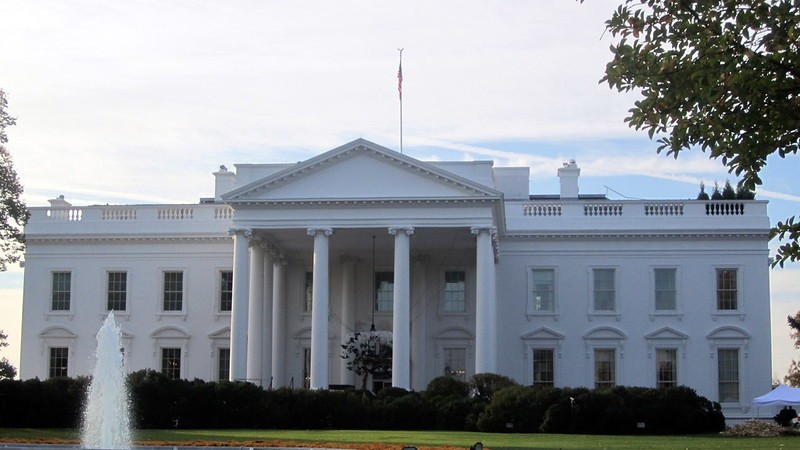
The White House announced a bold new strategy this week to address America’s most pressing issues: simply changing what they’re called.
Officials confirmed that inflation will now be referred to as “price appreciation,” the border crisis as “spontaneous global migration,” and rising crime as “community-led redistribution events.”
“Words matter,” said one senior administration official while standing in front of a chart showing grocery prices climbing like a SpaceX launch. “If Americans would just stop using such negative language, they’d realize things are actually going quite well.”
The announcement came during a press briefing in which reporters were handed a 47-page glossary titled “Equity-Based Vocabulary For A Thriving Nation.” The document encourages citizens to replace “problems” with “opportunities for narrative growth.”
Economists across the country were quick to respond, mostly by blinking slowly and checking if it was April Fool’s Day.
“We’ve been doing this wrong for years,” said Dr. Leonard Briggs of the Institute for Logical Thought. “Apparently, if we just call a recession ‘a vibe shift,’ the GDP fixes itself. Who knew?”
Meanwhile, Americans at the grocery store expressed confusion as they attempted to pay for “price-appreciated” eggs.
“I tried telling the cashier I was experiencing ‘temporary financial discomfort,’” said one shopper. “She told me that would be $9.47.”
The administration defended the move, insisting that the language shift is rooted in compassion.
“When you call it a ‘crisis,’ it creates anxiety,” explained another official. “When you call it ‘an evolving situation,’ it creates space for hope—and also less accountability.”
Faith leaders, however, offered a slightly different perspective.
“Scripture teaches that truth sets people free,” said Pastor Michael Reeves. “It does not teach that renaming reality makes it disappear. If it did, I’d start calling my mortgage a ‘blessing deposit.’”
In Congress, lawmakers immediately began drafting legislation to expand the initiative. One proposal would rename taxes as “mandatory generosity contributions,” while another suggests redefining national debt as “future-forward optimism.”
Critics argue the strategy may not hold up under real-world conditions.
“You can call a fire ‘thermal enthusiasm,’ but you still need water,” said one firefighter. “Preferably a lot of it.”
Despite the skepticism, the White House remains confident the plan will succeed, noting that approval ratings have already improved—after being reclassified as “public appreciation metrics.”
At press time, officials were reportedly considering renaming “voters” as “temporary opinion holders,” just in case the next election results need a little… rebranding.


