

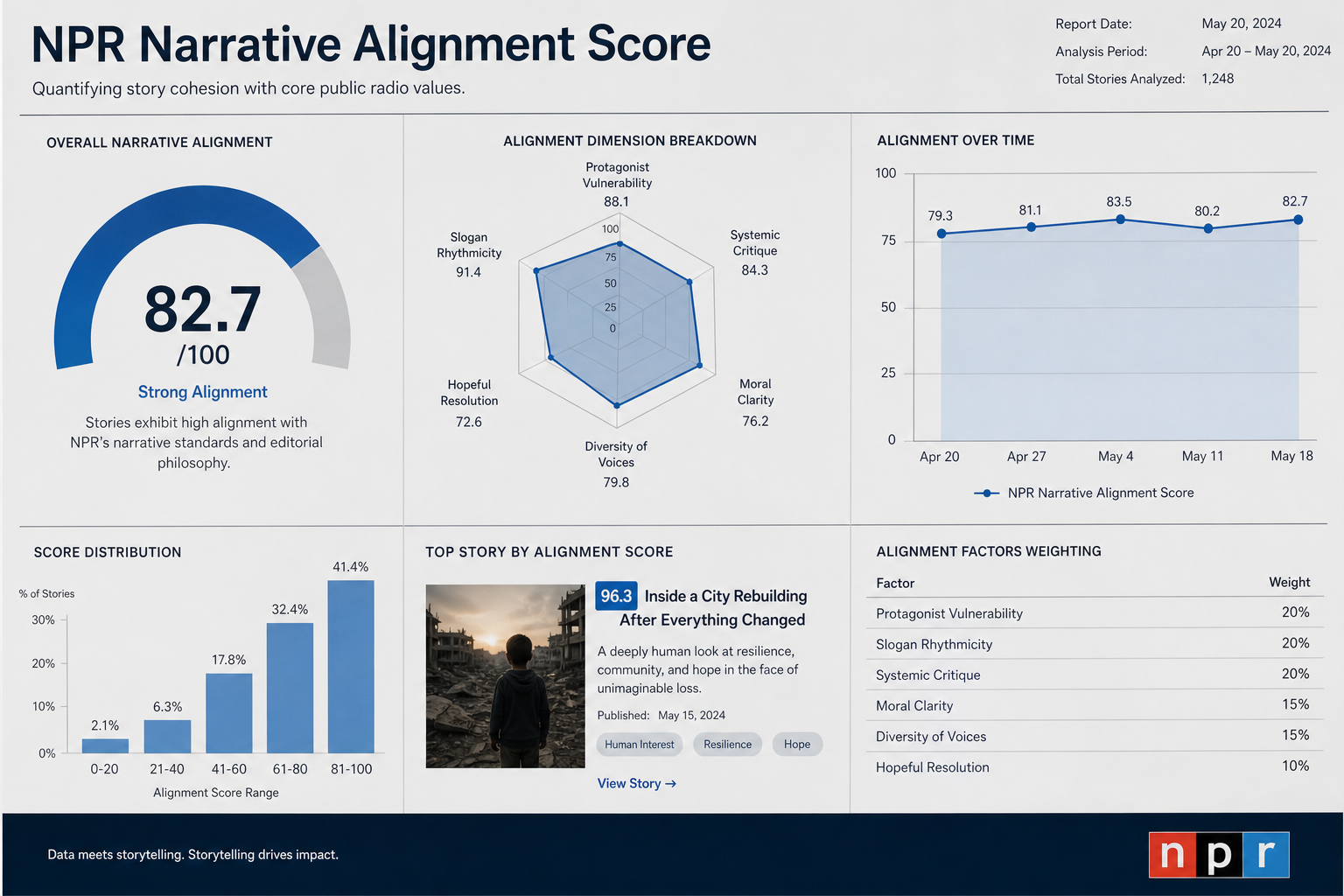
Internal Memo Outlines 'Problematic Protest' Filter
WASHINGTON, D.C. – In a move aimed at streamlining editorial decisions and maximizing listener comfort, National Public Radio is reportedly beta-testing a sophisticated new algorithm to determine which campus protests, rallies, and occasional building seizures are worthy of its calm, dispassionate coverage. The system, known internally as the 'Narrative Alignment Score' (NAS), is designed to automatically filter events for newsworthiness, saving producers the tedious manual labor of figuring out which victims to center.
The development comes on the heels of what one insider called 'a period of intense internal reflection,' a likely reference to the recent suspension of a senior editor who publicly suggested the network might have a slight political preference. The NAS system is seen as a decisive, data-driven solution to prevent such confusing viewpoints from ever reaching the airwaves again.
"Our goal is to eliminate friction in the news pipeline," explained a source familiar with the project, who requested anonymity to avoid being re-educated. "Why waste time sending a reporter to a protest if it doesn't check the right boxes? The NAS allows us to pre-validate a story's ideological purity before a single tote bag is deployed."
How the Score is Calculated
According to a leaked PowerPoint presentation, the Narrative Alignment Score is calculated using a proprietary blend of five key metrics, each weighted to reflect current progressive priorities:
- Protagonist Vulnerability Index (PVI): This metric assigns points based on the protesting group's position on the intersectional ladder. A protest led by students demanding the divestment from ideologically non-compliant nations receives a baseline score of 85. A protest by a pro-life student group, conversely, receives a score of -300 and triggers a network-wide security alert.
- Institutional Guilt Coefficient (IGC): This measures the historical culpability of the institution being protested. Universities with founding dates before 1960 automatically receive a high IGC, as do any entities associated with Western Civilization. A protest against 'the administration' is an easy 90 points. A protest against Hamas would require the development of new, theoretical mathematics to even score.
- Slogan Catchiness & Chant Rhythmicity (SCCR): Media-friendly slogans are critical for shareable audio clips. Chants with a simple, percussive cadence that can be easily repeated over a b-roll of students setting up tents score highly. Complex demands involving fiscal policy or free speech principles are heavily penalized for being 'aurally inaccessible.'
- Antagonist Framability Factor (AFF): How easily can the opposition be portrayed as unreasonable, reactionary, or simply un-cool? If counter-protesters are wearing American flag hats or quoting the Constitution, the AFF score skyrockets, granting the story an 'urgent coverage' designation. If the opposition makes a nuanced point, the story is flagged for 'potential platforming of harm.'
- Approved Vocabulary Usage (AVU): Does the protest's messaging utilize key terms such as 'systemic,' 'problematic,' 'decolonize,' and 'lived experience'? Each approved term adds a 1.2x multiplier to the final NAS. Use of unapproved terms like 'individual responsibility' or 'merit' immediately disqualifies the event from coverage.
A Tool for a Modern Newsroom
An internal FAQ document explains the system's benefits. "For years, our journalists have had to rely on instinct to determine whether a campus building being occupied is a vibrant expression of democratic dissent or a criminal act of trespassing. The NAS removes the guesswork," the document reads. "A high score means it's a 'student-led liberation of space.' A low score means it's a 'far-right insurrection.' It's that simple."
Sources confirm the system is already proving effective. A recent 'die-in' at a liberal arts college protesting the lack of gluten-free options in the cafeteria received an impressive NAS of 92, resulting in a three-part segment on Morning Edition. Meanwhile, a student government debate over viewpoint diversity was given a score of 8, with the system recommending it be ignored entirely unless a conservative student said something that could be clipped out of context.
When reached for comment, an NPR spokesperson would neither confirm nor deny the existence of the NAS, stating only that the network "remains committed to uplifting the stories that need to be told, and thoughtfully setting aside the ones that don't."


