

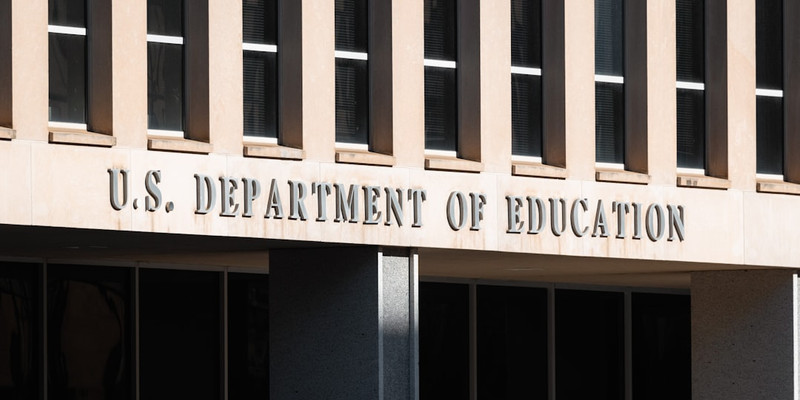
Under the plan, millions of students will no longer receive grades based on individual performance.
Instead, every student in America will receive the exact same score determined by the least prepared member of their assigned team.
Officials described the move as “a natural evolution of public education.”
“For years we taught students that accountability matters,” said Acting Director of Collaborative Learning Initiatives Brad Harmon. “Frankly, that was creating unrealistic expectations about adulthood.”
The initiative immediately drew praise from professional procrastinators nationwide.
“I've been preparing for this moment my whole life,” said sophomore Dylan Brooks while contributing absolutely nothing to a six-week assignment. “Finally the system recognizes my talents.”
Educators insist the reform will better prepare students for modern institutions.
Instead of learning mathematics, students will spend time drafting mission statements explaining why mathematics feels exclusionary.
History classes will focus primarily on identifying which historical figures should apologize.
Science courses will remain available pending approval from a committee studying whether gravity disproportionately impacts shorter individuals.
School administrators expressed excitement.
“This removes the burden of measuring achievement,” said one superintendent. “Achievement itself was becoming stressful.”
Parents appeared less enthusiastic.
“My daughter studies four hours every night,” said Karen Mitchell. “Now her grade depends on a kid whose primary academic strategy is pretending his Chromebook is updating.”
Officials responded that such concerns reveal an unhealthy attachment to outcomes.
To ensure fairness, valedictorians will now be selected through a lottery system conducted during a mandatory feelings circle.
Honor rolls will be replaced with Participation Recognition Communities.
Students earning perfect scores will receive counseling to address excessive excellence.
Meanwhile, universities have already begun adapting.
Several colleges announced they will replace entrance exams with personality-based scavenger hunts.
One admissions office revealed plans to evaluate applicants according to their ability to describe a sandwich as a lived experience.
Not everyone opposes the changes.
A coalition of bureaucrats praised the plan as a historic achievement in educational simplification.
“We've eliminated layers of administration,” one official explained. “To oversee that elimination, we've created seventeen new oversight departments.”
Faith leaders gently suggested that truth, discipline, and hard work still matter.
Government consultants immediately launched a three-year study to determine whether hard work unfairly advantages people who do it.
At press time, the first National Group Project had been completed successfully.
Unfortunately, nobody could locate the student who was supposed to turn it in.


