

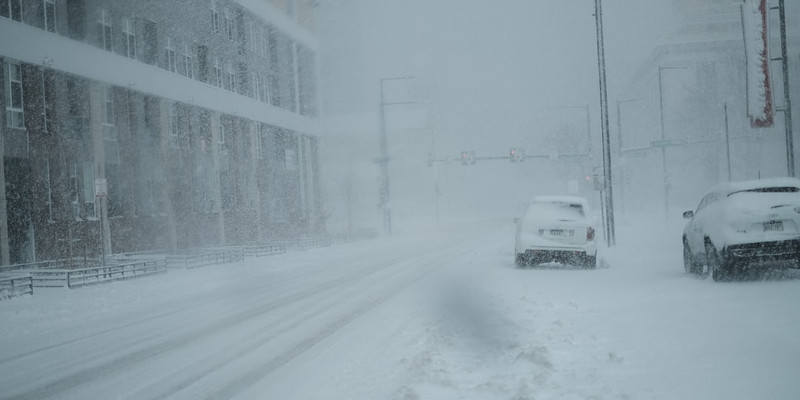
Climate experts gathered this week for an emergency summit after an unseasonal snowstorm disrupted carefully curated narratives about imminent global overheating, prompting urgent calls to regulate weather itself.
The storm, which blanketed several regions in inconveniently cold temperatures, reportedly caused widespread confusion among citizens who had already switched their wardrobes to “apocalyptic summer mode.”
“We cannot have rogue weather events undermining public understanding,” said one climate official while gesturing at a snow-covered chart labeled “Record Heat Everywhere.” “This kind of inconsistency erodes trust in our messaging.”
Scientists emphasized that while climate change remains an existential threat, the real crisis is that nature continues behaving in ways that are not easily summarized in a single infographic.
“To be clear, this snowstorm is actually proof of warming,” explained a researcher. “It’s just… a more complicated kind of proof that requires a lot of explaining and ideally fewer follow-up questions.”
In response, policymakers are considering a sweeping “Weather Stability Act” aimed at eliminating unpredictable conditions and replacing them with a more consistent, narrative-friendly climate experience.
Under the proposal, weather patterns would be adjusted to align with official forecasts, ensuring that all future seasons meet expectations both scientifically and emotionally.
“We’re not controlling the weather,” clarified one spokesperson. “We’re simply guiding it toward outcomes that better reflect our projections.”
The plan includes the creation of a federal “Atmospheric Compliance Agency,” tasked with monitoring clouds, wind patterns, and temperature fluctuations for signs of non-cooperation.
“If a cold front shows up without authorization, there will be consequences,” said an agency insider. “We’re talking fines, re-education, possibly relocation to a more compliant atmosphere.”
Citizens have responded with mixed reactions, with some expressing skepticism about the feasibility of regulating the weather.
“I’m not sure you can legislate snow out of existence,” said one resident while shoveling his driveway. “But I suppose they’ve surprised me before.”
Others, however, welcomed the idea of more predictable conditions.
“As long as it’s always 72 degrees and matches my app, I’m fine with it,” said another. “I just don’t want to be emotionally blindsided by reality.”
At press time, officials confirmed that the snowstorm had officially been reclassified as a “localized heat event,” and assured the public that future weather would be more cooperative moving forward.


