

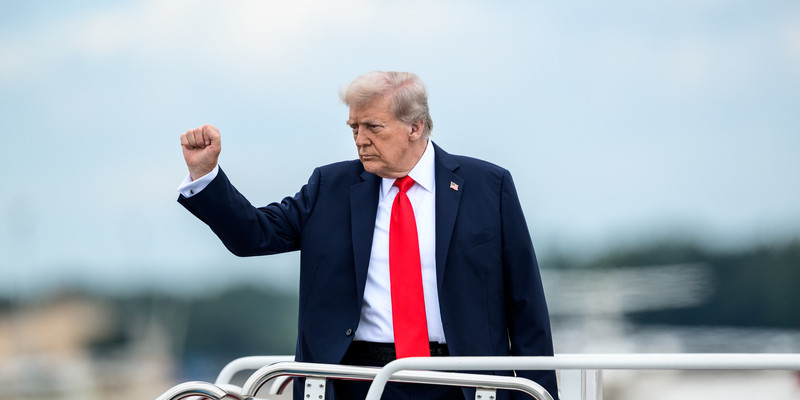
Washington — In a shocking departure from decades of carefully calibrated diplomatic finger-wagging, former President Donald Trump reportedly ordered a military strike that actually destroyed the intended military targets, leaving foreign policy analysts scrambling to remember how war is supposed to work.
Defense officials confirmed that a series of coordinated strikes eliminated dozens of Iranian military installations connected to naval operations in the Persian Gulf. Experts say the development has caused significant confusion among members of the Washington policy class, many of whom had assumed the goal of military action was simply to produce strongly worded press releases.
“This is deeply troubling,” said Georgetown professor Leonard Bristow, who has spent 30 years explaining why decisive action is impossible. “If strikes start achieving their objectives, it could completely undermine the modern framework of strategic ambiguity, which we worked very hard to perfect.”
According to sources inside the Pentagon, the operation reportedly targeted multiple Iranian military assets with unusual accuracy. Satellite imagery showed destroyed facilities, disabled vessels, and a notable lack of interpretive dance protests at the United Nations.
For many longtime observers, the biggest shock was that the operation appeared to follow a radical military doctrine known as “hitting the enemy.”
“This is the problem with outsider leadership,” said foreign policy commentator Dana Feldman. “Career experts understand that the proper sequence is: hold summit, issue sanctions, hold another summit, release statement, hold emergency summit, and finally write a book about the summit.”
The unexpected success of the strike has reportedly left cable news producers in a state of emergency. Several networks had already booked three retired generals and two poets to discuss the importance of restraint before learning the targets had already been destroyed.
“This completely ruined our programming,” one producer complained. “We had an entire graphic prepared titled ‘Is America Too Decisive?’”
Meanwhile, progressive activists quickly organized a candlelight vigil to mourn the tragic loss of hypothetical diplomatic options.
“We’re not saying Iran should be allowed to attack shipping lanes or threaten regional allies,” said activist Riley Tran while holding a sign that read ‘Bombing Is Violence.’ “We’re just saying there were at least seventeen more conferences we could have held first.”
The State Department also confirmed that a group of European leaders expressed concern that the strikes might reduce the amount of meetings scheduled for the remainder of the year.
“Frankly, we’re worried about the impact on international conferences,” admitted one diplomat. “If conflicts start getting resolved quickly, what exactly are we supposed to do in Geneva all spring?”
Despite the criticism, many Americans appear confused by the outrage, noting that destroying military targets during a military operation seems suspiciously aligned with the purpose of having a military.
At press time, Washington think tanks were urgently drafting a 600-page report explaining that the real problem with the strike was that it worked.


