

‘This Changes Almost Nothing,’ Vow Experts
WASHINGTON, D.C.—In a revelation sending mild ripples of confusion through the nation’s coastal elite, a new report from the American Institute for Confirming Preconceptions (AICP) has found that the American electorate is not, in fact, composed entirely of adjunct professors, nonprofit grant writers, and their personal baristas.
The groundbreaking study, titled “Beyond The Co-Op: An Analysis Of People Who Buy Groceries In Bulk,” suggests that years of political polling may have been slightly compromised by sampling bias, such as drawing 98% of their respondents from the waiting list for a new brunch spot in Silver Lake.
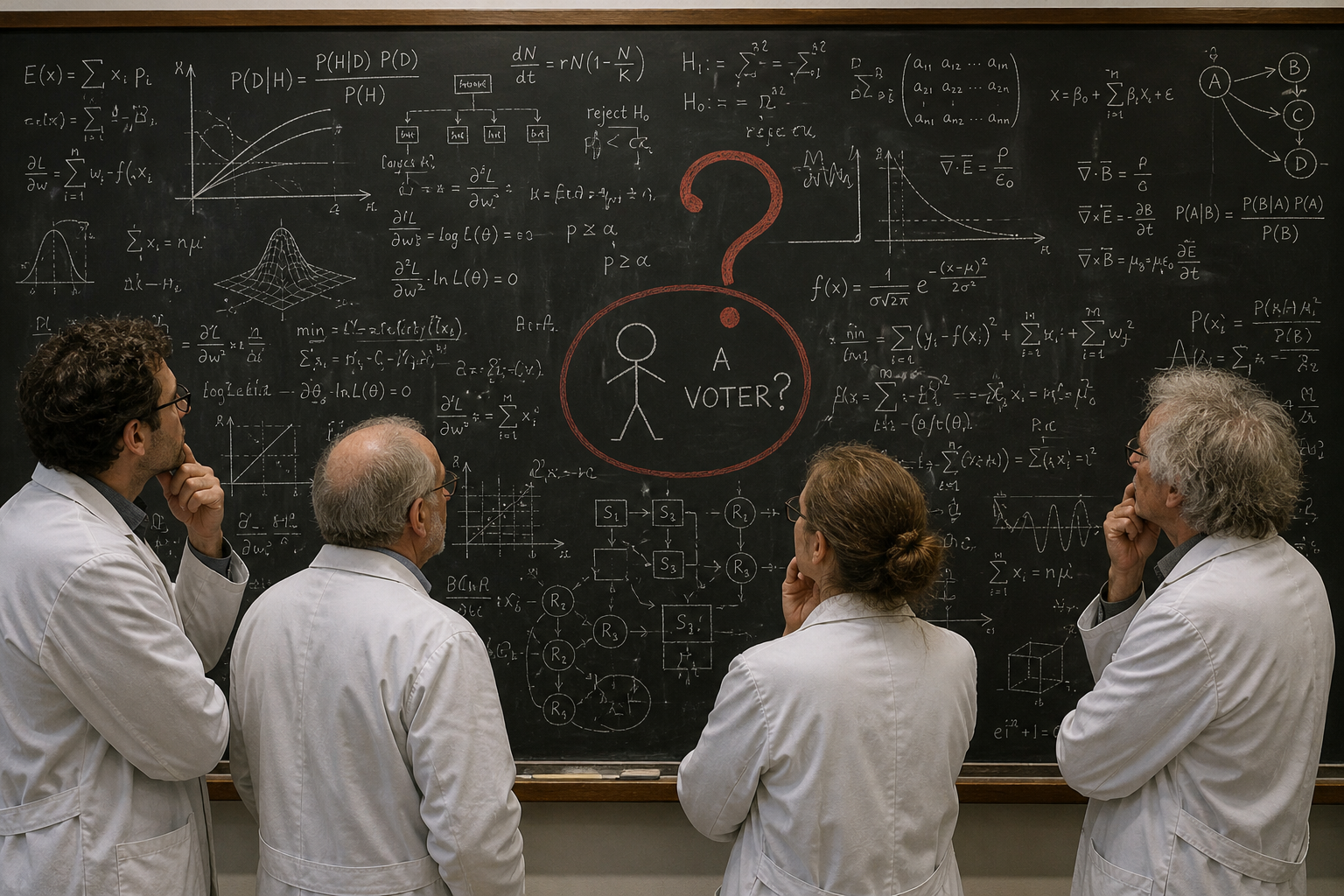
“We are frankly stunned,” said Dr. Evelyn Reed, lead analyst for the widely cited ‘Blue Bubble’ polling firm. “Our models, which have been peer-reviewed by at least three of my closest friends, showed that the number one issue for Americans was the carbon footprint of the seasonal latte. To find out it’s actually inflation and the border is… well, it’s a teachable moment for all of us.”
A Methodological Quagmire
The AICP’s internal audit discovered that the term “likely voter” had been inadvertently defined as “anyone who has ever used the term ‘problematic’ in a non-ironic way.” This led to survey samples that were, according to the report, “statistically indistinguishable from the staff of a typical NPR affiliate.”
One media analyst, who spoke on the condition of anonymity because he was in the middle of a hot yoga class, expressed the industry’s confusion. “We keep hearing about these demographic shifts, particularly with Hispanic voters. Our working theory was that our intern had accidentally polled the Goya Foods corporate retreat. To learn that these are real people with diverse opinions is jarring. It challenges our core belief that we know what’s best for them.”
The report highlights several key errors in recent polling methodology:
- Geographic Diversity: Calls were disproportionately placed to area codes in Brooklyn, San Francisco, and Cambridge, Massachusetts. Pollsters reportedly believed “The Midwest” was the name of a new Wes Anderson film.
- Question Framing: A common opening question, “On a scale of 1 to 10, how much have you interrogated your own privilege today?” was found to have a surprisingly high hang-up rate in states that have a state fair.
- Demographic Weighting: Responses from a vegan poetry blogger in Portland were weighted as being equivalent to the responses of 500 plumbers from Texas. “In hindsight, that may have been an overcorrection,” Dr. Reed admitted.
Forging a New Path Forward (Slightly to the Left of Center)
In response to the crisis, the AICP has announced a bold new initiative, “Project Real People… We Think.” The plan involves sending teams of sociologists on carefully managed expeditions into “flyover country” to observe the local inhabitants from the safety of a rented Prius.
“We’re treating it like a sociological safari,” Dr. Reed explained, holding up a map where Ohio was labeled ‘Here Be Dragons.’ “We will have field guides, translators for non-academic dialects, and an emergency supply of oat milk. Our goal is to make contact with someone who has actually used a screwdriver for its intended purpose in the last month. The logistics are a nightmare, but we are committed to this groundbreaking research.”
As a first step, pollsters are being trained to ask about topics other than student loan forgiveness and the problematic nature of classic literature. A new script includes the brave, exploratory question: “So… what are your thoughts on the price of a gallon of gasoline?” Early test runs have been described as “uncomfortable but fascinating.”
Despite the stunning findings, most media outlets have vowed to continue their current practices. “Look, if a poll comes out that we don’t like, we’ll just call it an outlier,” said one cable news producer. “And if a poll comes out that we do like, we’ll run it on a 24-hour loop. It’s a simple, effective system that has served us well, reality notwithstanding.”
The AICP remains optimistic. “By making these minor tweaks, like occasionally calling a phone number that isn’t a direct line to a university faculty lounge, we are confident our 2024 predictions will be just as accurate and reliable as our 2016 ones were,” Dr. Reed concluded.


