

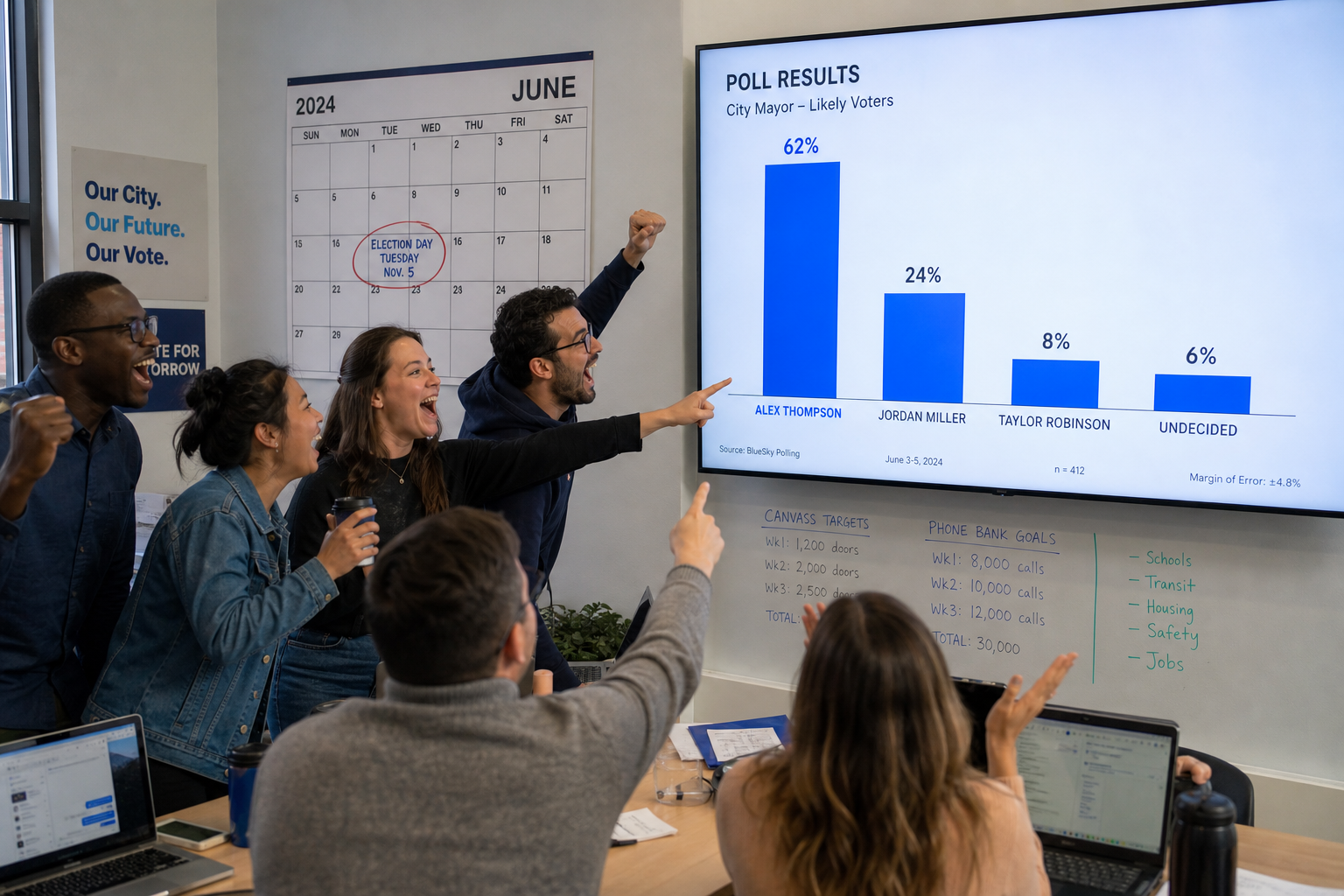
‘This Is The Data We’ve Been Waiting For,’ Says Strategist
WASHINGTON, D.C. — In a bold effort to shore up morale ahead of the next election cycle, the Democratic National Committee has reportedly received the results of a groundbreaking new poll confirming that their unshakeable faith in favorable polling is, itself, statistically sound and correct.
The poll, conducted by the newly formed Center for Affirming Progressive Narratives (CAPN), found that 98% of likely Democratic voters believe that polls predicting a Democratic victory are inherently more accurate than polls that do not. The survey, which has a margin of error of +/- 1%, reportedly only sampled voters who had a positive, hopeful outlook on the future.
“This is the data we’ve been waiting for,” declared lead strategist Cadence Wexler, who recently completed a fellowship in Post-Structural Campaign Theory. “For years, we’ve operated under the flawed assumption that reality should dictate our electoral expectations. This new data proves that our expectations should, in fact, dictate reality. It’s a complete paradigm shift.”
Sources within the party say the findings have sent a wave of relief through campaign headquarters nationwide, which had been struggling with lingering trauma from the ‘Great Unpleasantness’ of 2016 and other periodic electoral disappointments.
Learning From The Past By Ignoring It More Effectively
Wexler explained that the party had learned crucial lessons from past failures. “The mistake in 2016 wasn’t trusting the polls; it was a failure to trust them hard enough,” she clarified, adjusting her thick-rimmed glasses. “There was a lingering collective doubt that created a negative energy field, subtly influencing undecided voters in the Midwest. This time, we’re practicing what we call ‘Manifest Destiny Polling’—if you believe the numbers, they will come.”
To that end, the DNC is launching a new “Poll-sitivity” campaign. The initiative encourages supporters to only read headlines from polls showing their candidates ahead by at least five points. A companion app, “The Echo,” has been developed to filter out any news, data points, or family members’ Facebook posts that could induce “electoral anxiety.”
“I was starting to get worried when I saw my neighbor put up a yard sign for the other guys,” said River Houston, a 28-year-old artisanal kombucha curator from Silver Lake, CA. “It was really harshing my vibe. But then I checked The Echo, and it showed me three polls from my zip code that said we're up by 40 points. I feel so much better. The science is settled.”
A New Faith-Based Initiative
Political historians are calling the phenomenon a fascinating evolution in electoral strategy.
“We're seeing a profound commitment to a belief system in the face of repeated, contradictory evidence,” said Dr. Alistair Finch of the University of Portland’s satellite campus. “In previous eras, we called this ‘faith.’ Today, we call it ‘data-driven analysis.’ It’s the same principle, just with more charts.”
The CAPN poll also found that 85% of respondents felt that pollsters who produce unfavorable results should have their methodology “independently reviewed” by a panel of a dozen Twitter journalists and a TikTok influencer. A further 70% agreed with the statement, “Any poll showing us losing is, by definition, a form of voter suppression.”
Buoyed by the poll about polling, party officials are reportedly so confident that they have already begun phase two of their strategy: commissioning another poll to see how voters would feel about cancelling the election altogether and just going with what the initial, most favorable polls said.
“It would save everyone a lot of time and stress,” Wexler noted. “Plus, it’s the only way to guarantee the outcome aligns with the data we liked in the first place.”


