

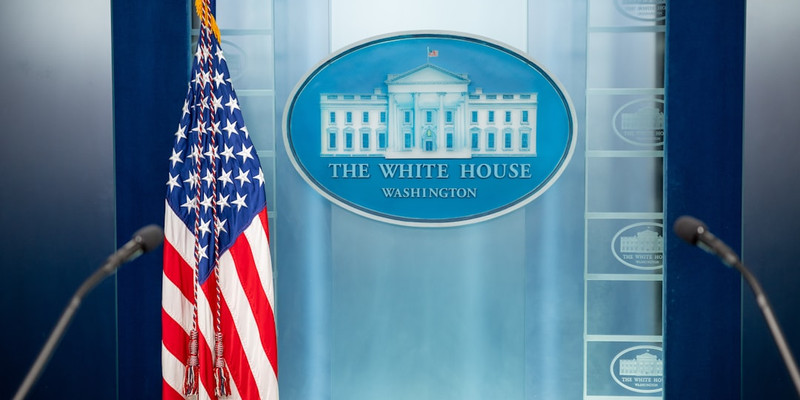
The White House this week unveiled what officials are calling a “historic step forward for democracy”: a federally coordinated system in which reality itself will be determined by a rotating panel of experts, activists, and at least one guy from Twitter with a blue checkmark.
Dubbed the “Consensus Reality Initiative,” the program aims to reduce misinformation by ensuring that facts are no longer discovered, but instead carefully curated through a robust voting process.
“Truth has been far too divisive,” said one senior official while adjusting a binder labeled Approved Thoughts, Spring Edition. “By allowing a diverse panel to vote on what is real, we can finally unify the country around a shared set of facts that everyone is required to agree with.”
The process is simple. Each morning, the panel gathers to review pending questions such as “Is inflation happening?” or “What is a woman?” After several hours of discussion, emotional testimony, and interpretive dance, a majority vote is taken. The results are then immediately enforced across all federal agencies, social media platforms, and Thanksgiving dinner tables.
Critics have raised concerns that reality might become unstable under such a system, but officials dismissed those fears.
“Reality has always been fluid,” explained Dr. Lenora Bright, a newly appointed Chair of Perception Equity. “Gravity, for instance, has historically marginalized those who prefer not to fall. We’re just leveling the playing field.”
To ensure compliance, the administration has partnered with major tech companies to roll out “Reality Alerts,” which will notify users when their personal experiences conflict with the official version of events.
“I got a notification that my grocery bill didn’t actually go up,” said one confused citizen. “It said I was experiencing ‘price perception bias.’ Honestly, that was a relief because I was starting to think I couldn’t afford eggs.”
Meanwhile, schools are already preparing to implement the new guidelines. Teachers will now begin each class by asking students, “What are we believing today?” followed by a brief moment of silence for outdated concepts like objective truth.
Not everyone is on board. A small group of dissenters has reportedly begun clinging to what they call “observable reality,” though experts warn this could lead to dangerous levels of independent thinking.
“Observation is inherently problematic,” said Bright. “It privileges eyesight, which not everyone identifies with.”
Despite the controversy, the administration remains optimistic. Officials say the initiative will bring the nation closer together by eliminating disagreement entirely.
“At the end of the day, truth is about unity,” the senior official concluded. “And if we all agree on what’s real, even if it isn’t, that’s a win for democracy.”
The panel is expected to vote next week on whether that statement is true.


