

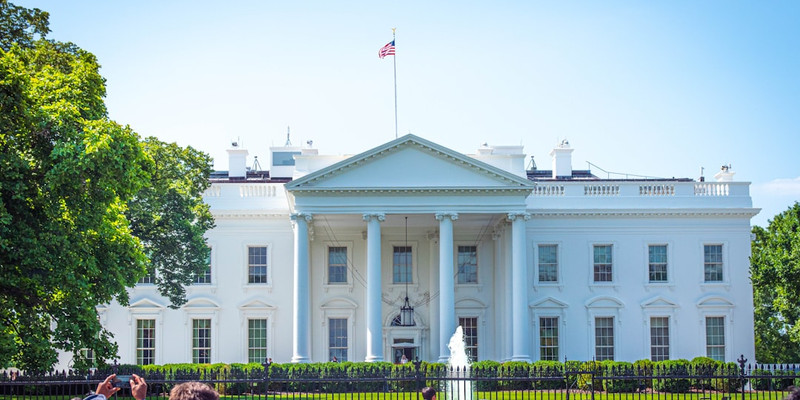
The White House this week unveiled a bold new initiative aimed at tackling what officials describe as “the growing national crisis of word confusion,” announcing the creation of a federal task force dedicated to redefining commonly used terms.
Dubbed the “Department of Contextual Reality Adjustment,” the group will reportedly begin by examining controversial words like “recession,” “border,” and “woman,” before moving on to more complex phrases like “common sense.”
“We’ve reached a point where words are no longer serving the needs of the moment,” said one administration official while flipping through a glossary labeled Version 7.3: Democracy Edition. “Our goal is to ensure language evolves fast enough to match whatever we’re saying today.”
According to insiders, the task force will include linguists, political strategists, and at least one social media influencer who once went viral for redefining the word “literally” to mean “emotionally.”
Critics have questioned whether the initiative is necessary, noting that Americans have managed to communicate effectively for centuries without federal oversight of vocabulary. But supporters insist the move is long overdue.
“Without clear definitions, people might start holding us accountable for what we actually said,” explained a senior advisor. “That’s simply not sustainable in a modern democracy.”
Early drafts of the task force’s work suggest significant changes are already underway. For example, the word “inflation” may soon be updated to mean “a temporary feeling of financial discomfort caused by insufficient optimism,” while “border crisis” is expected to be replaced with “geographic enthusiasm.”
The administration has also proposed a new classification system for truth, dividing statements into three categories: “true,” “false,” and “contextually beneficial.”
“This is about compassion,” said another official. “If a statement hurts someone’s feelings, it may need to be redefined as untrue—even if it happened.”
Not everyone is convinced. One unnamed economist reportedly asked whether redefining “debt” would make it disappear, prompting an awkward silence followed by a reminder that he was no longer invited to meetings.
Meanwhile, everyday Americans are adjusting as best they can. “I used to think I understood words,” said one voter. “Now I just wait for the update like it’s my phone.”
At press time, the task force confirmed it would next address the meaning of the word “accountability,” though officials cautioned that the definition may be delayed indefinitely due to “unforeseen clarity issues.”


