

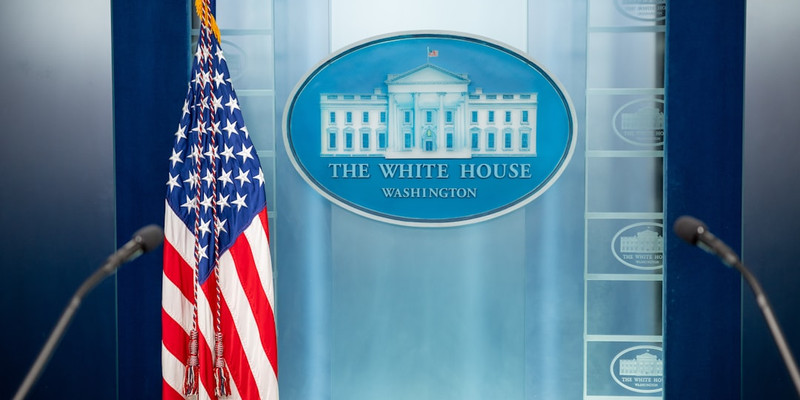
In a bold move to safeguard democracy from dangerous ideas, the White House this week announced the creation of a new federal initiative designed to combat misinformation — by officially clarifying which information qualifies as acceptable.
Dubbed the “Office of Civic Narrative Alignment,” the program will coordinate across agencies to ensure that Americans receive facts that are “accurate, responsible, and properly formatted for emotional safety.”
A spokesperson described the office as “not a censorship board in any sense,” clarifying that it will merely “flag, correct, suppress, discourage, algorithmically reduce, and compassionately de-platform content that diverges from federally harmonized truth.”
“Our goal isn’t to silence anyone,” she explained. “It’s simply to make sure that when citizens speak, they’re echoing something helpful.”
The new office will reportedly partner with major tech platforms to identify problematic phrases such as “I disagree,” “Show me the data,” and “Is that constitutional?”
An internal memo outlined three tiers of misinformation:
Tier 1: Obviously false statements.
Tier 2: Statements that may become false next week.
Tier 3: Statements that are technically true but emotionally inconvenient.
Civil liberties advocates expressed mild concern, prompting administration officials to reassure the public that the office will be staffed by “nonpartisan experts in narrative wellness.”
One advisor elaborated: “Free speech is fundamental. But just like driving, it works best when there are guardrails, speed limits, traffic cameras, and the occasional roadblock.”
Critics argued the program resembles something out of dystopian fiction, though officials rejected that comparison.
“That’s completely unfair,” said one communications director. “In dystopian novels, the ministries have scarier names.”
The initiative will also feature a public hotline where citizens can report suspicious relatives who forward unapproved articles at Thanksgiving.
“We’re calling it ‘See Something, Say Something, Especially If It’s Your Uncle,’” an official confirmed.
Polling indicates Americans are evenly split on the program, with 50% saying it threatens free expression and the other 50% waiting to see what they’re allowed to think about it.
At the conclusion of the press conference, reporters were handed a helpful pamphlet titled “Frequently Approved Questions.”
The final page contained a simple reminder: “Truth will set you free — once it’s been properly authorized.”


