

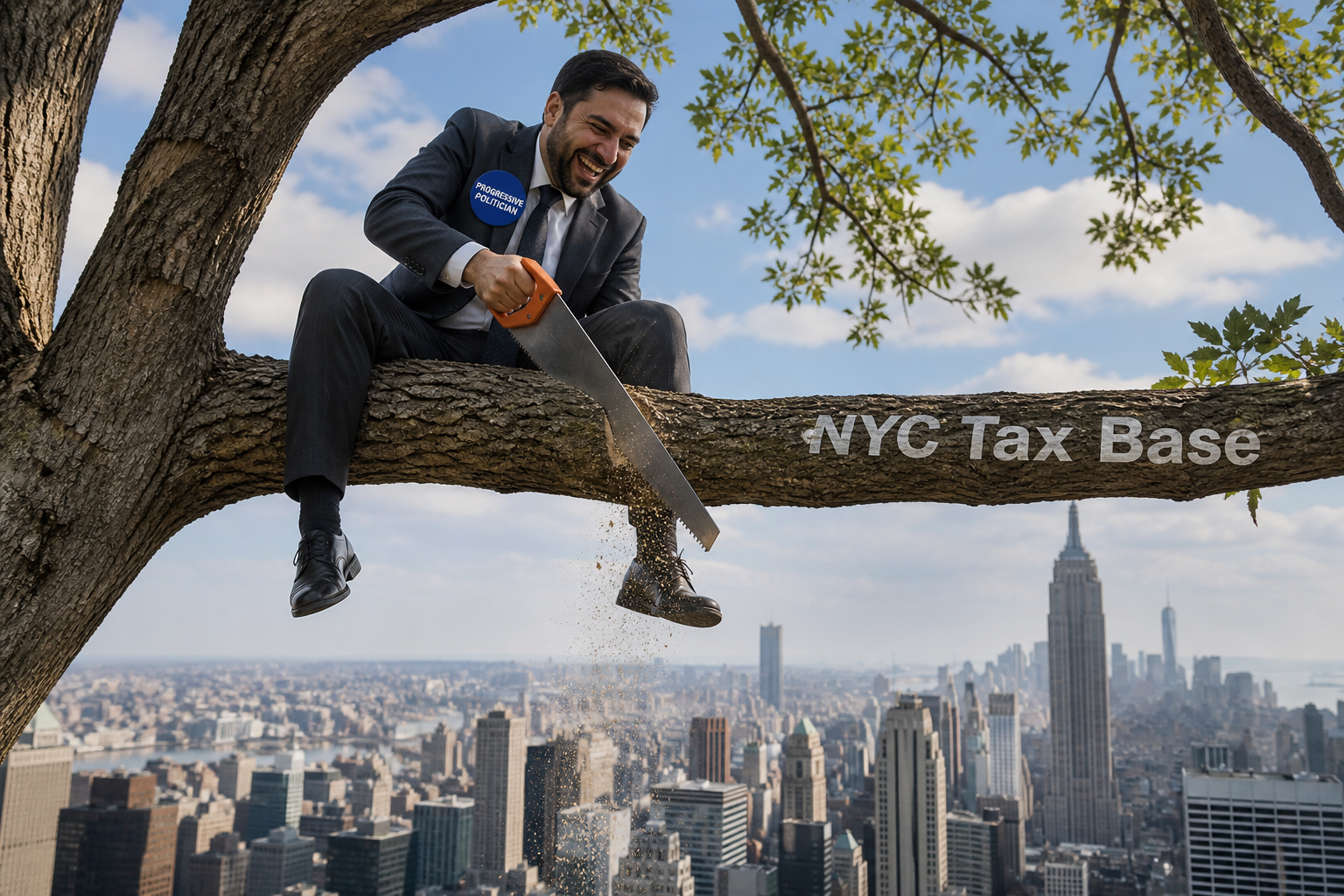
City Solves Problem of Having Too Much Tax Revenue
NEW YORK, NY – In a bold move that has left conventional economists speechless, New York progressives have unveiled a groundbreaking plan to solve the city’s complex fiscal and housing issues by simply getting rid of anyone who has too much money. The proposal, championed by Assemblyman Zohran Mamdani, centers around a ‘pied-à-terre’ tax, a clever mechanism designed to make owning a second home in the city so financially punishing that the owners will have no choice but to leave.
“For too long, our city has been plagued by the scourge of high-net-worth individuals who own property here but don’t live here full-time,” said a spokesperson for Mamdani’s office, presumably from a fully occupied, rent-stabilized apartment. “They contribute enormous sums in property taxes, spend lavishly at local businesses, and support thousands of service jobs, but the vibes are just off. It’s a moral crisis.”
The proposed tax targets non-primary residences valued over $5 million, a solution proponents say will finally address the crisis of beautiful, empty apartments overlooking Central Park. The goal is to apply a progressive tax rate so high that it convinces oligarchs, tech billionaires, and retired CEOs from Ohio to sell their properties and go bother some other city, like Miami or London.
The Genius of Negative Revenue
Critics, mostly people who have passed a basic economics course, have pointed out that driving away the city’s wealthiest part-time residents will also drive away the significant tax revenue they generate. Supporters of the bill have dismissed these concerns as narrow-minded, capitalist thinking.
“Thinking about a budget in terms of ‘revenue’ and ‘expenses’ is frankly a bit problematic,” explained a local activist and urban studies Ph.D. candidate, Skye Moonwater. “What we are generating here is not cash, but something far more valuable: moral purity. Once the last hedge fund manager sells his condo, the city’s collective spirit will be so cleansed that we won’t even need money. We will subsist entirely on good intentions and community gardens.”
The plan’s architects have assured the public that the tax is projected to raise hundreds of millions of dollars, a figure based on the heroic assumption that every single person targeted by the tax will choose to stay and pay it rather than simply moving their assets to a more welcoming jurisdiction. This financial model, known as the 'Hope & Dreams' projection, has been gaining traction in progressive circles.
A Brighter, Emptier Future
The benefits of the plan are expected to be immediate. With billionaires no longer occupying penthouses for three weeks a year, the doormen, housekeepers, private chefs, and drivers who serve them will be liberated from the burden of employment. Restaurants in Midtown will be freed from the tyranny of serving overpriced tasting menus, and luxury retailers on Madison Avenue can finally be converted into the fair-trade coffee co-ops and gender-neutral pottery studios the city truly needs.
“Imagine a Park Avenue where every single apartment is dark at night,” one proponent tweeted dreamily. “No lights, no people, no capital. Just quiet, empty buildings standing as monuments to our progressive victory. It’s beautiful.”
Insiders report that if the pied-à-terre tax is successful in purging the city of its part-time affluent, similar measures are already being considered. Tentative proposals include a ‘Second Yacht Surcharge’ for any vessel docked for fewer than 48 weekends a year at the 79th Street Boat Basin, an ‘Excessive Michelin Star Dining Fee,’ and a mandatory ‘Subway Humility Tax’ for anyone caught using a black car service more than once a week.
When asked who would pay for the city’s vast social programs, infrastructure, and public-sector salaries once the tax base has been successfully hollowed out, Assemblyman Mamdani’s office simply replied that such questions miss the point. “We are building a more equitable New York,” a statement read. “And if that means there’s no money left to pay for anything, well, that’s a sacrifice we’re willing to make other people take.”


