

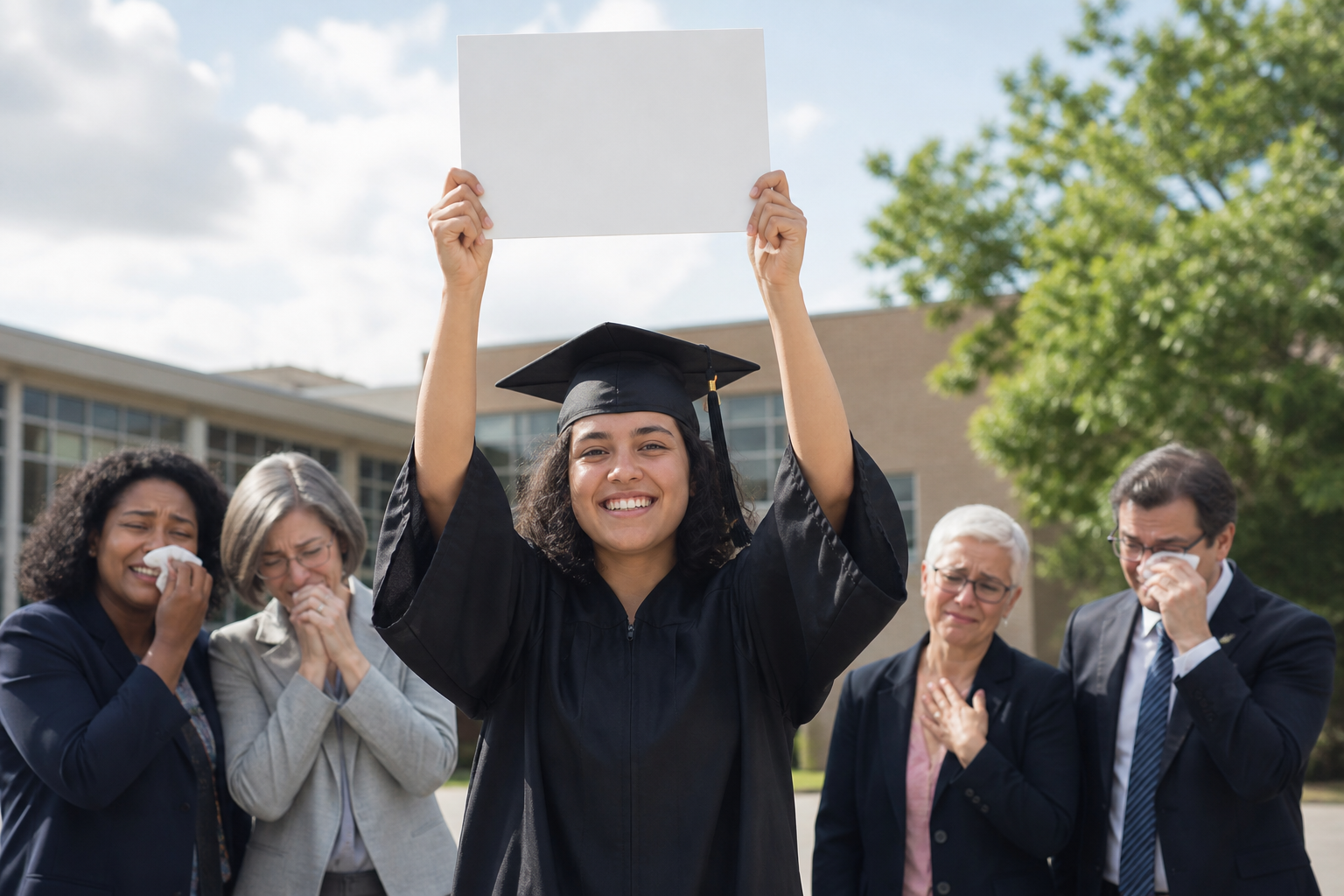
State Pioneers Bold New ‘Effort-Optional’ Education Model
SACRAMENTO, CA—In a move hailed by educational theorists as both “brave” and “post-knowledge,” California’s State Board of Education has taken a decisive step toward permanently eliminating the high school exit exam, a long-standing tool of oppression that cruelly required students to demonstrate a rudimentary grasp of math and English before receiving a diploma.
The exam, which has been suspended since 2015, was a relic from a bygone era when educators believed a high school education should correspond with a baseline level of academic achievement. Now, enlightened officials are recognizing that the biggest barrier to graduation is, in fact, the requirement to be educated.
“For too long, we have allowed the bigoted forces of arithmetic and reading comprehension to dictate a student's future,” explained Dr. Anya Sharma, a leading equity consultant for the state. “Asking a student to solve for 'x' or identify the theme in a paragraph creates an environment of anxiety and reinforces outdated hierarchies of knowledge. By removing the test, we are not lowering the bar; we are lovingly dismantling the entire concept of a bar.”
From Standardized Tests to Standardized Feelings
The proposal would replace the archaic examination with a more holistic and progressive measure of a student's readiness for the world: their vibes. While details are still being finalized, sources say the new graduation requirement may involve submitting a portfolio of affirming TikToks, a personal essay on one’s lived experience of not wanting to do homework, or simply a signed affidavit confirming the student is a “global citizen with good intentions.”
“My true passion is curating playlists that dismantle patriarchal soundscapes,” said local senior Aiden, who uses ‘they/flow’ pronouns. “The stress of having to memorize the quadratic formula was really harshing my mellow and preventing me from doing the real work. Now I’ll have so much more time to decolonize my Spotify.”
Critics, mostly disgruntled tutors and textbook publishers, argue that removing the last vestige of academic accountability might produce graduates who are unprepared for college or the workforce. Proponents call this view problematic and exclusionary.
“The idea that one needs to ‘know things’ to be a productive member of society is a construct,” Dr. Sharma clarified, adjusting her horn-rimmed glasses. “What is truly important is a student’s ability to feel, to empathize, and to correctly identify every form of systemic injustice they see on their For You Page. This exit exam failed to measure any of that.”
A Future Unburdened by Facts
The board is confident that colleges and employers will welcome this new wave of graduates, who will arrive unburdened by the rigid constraints of knowledge and ready to be molded.
“Imagine a workforce free from the tyranny of correct answers,” mused one board member on a hot mic. “Think of the innovation possible when no one is held back by knowing how something is supposed to work. We’re not just graduating students; we’re graduating possibilities. Infinite, beautifully uninformed possibilities.”
As the state prepares to officially sever ties with academic standards, students are reportedly celebrating the dawn of a new era where the only thing standing between them and a diploma is four years of attendance—give or take. For the first time in California history, every student will have an equal opportunity to graduate, regardless of skill, knowledge, or effort. And that, educators agree, is a success story you can’t put a grade on.


